
ARTO OLL
Graduated from the University of Tallinn. Defended his PhD thesis „Estonian Navy in the War of Independence 1918-1920“ in 2018. Since 2013 working as a researcher (Naval History) at the Estonian Maritime Museum. Specialized in 19.-20. century naval history, naval strategic thought and Estonian Navy. 2024-2025 Head of the Chair of Strategy at the Estonian Military Academy. Author of three books and numerous articles on the given subjects and a visiting faculty member at the Tartu University.
Abstract “Coastal Fortresses of the Estonian Navy, 1918-1940”
The Estonian Navy inherited the naval fortifications from the Russian Empire. Essentially, most of them severely damaged by the retreating Russians in 1918. This presentation provides an overview of how they were planned to be restored, what role was assigned to them in the context of the country’s defence strategy, and how their capabilities and weaknesses were viewed in the context of future warfare. The coastal defence zone was improved, modernized, and new coastal defence batteries were built throughout the 1920s and 1930s. Because of their existence, Tallinn was considered one of the best-protected capitals in Europe because these guns played a vital role in the strategic concept in closing of the Gulf of Finland.

HEIKO HEROLD
Dr. Heiko Herold is an independent historian and publicist. He studied Early and Modern History, Economic History and Media Science at Düsseldorf University. His dissertation analyzed the role of the Imperial German Navy’s cruiser squadron as an instrument of colonial and world policy in 1885-1901. He is author, co-author and editor of numerous publications focusing on German naval, maritime and colonial history as well as transaltlantic relations, maritime security, hybrid warfare and geopolitics. From 2011-2019, he worked as Public Affairs Specialist at U.S. Consulate General Hamburg. From 2021-2024, he was Chief Representative of the Konrad Adenauer Foundation in Shanghai. Since May 2024, he is Non-Resident Fellow at the Intitute for Security Policy at Kiel University. As a Commander (OF-4) in the German Navy Reserve, he regularly serves at the Bundeswehr Command and Staff College and at the Hamburg Regional Command.
Abstract “German coastal defense in World War I”
This presentation analyzes how the German Empire organized, equipped, and deployed its coastal defenses in the North and Baltic Seas during World War I.
In the North Sea, Germany faced the superior Royal Navy and relied on a multi-layered defense system centered around Heligoland Bight, Jade Bight, and the Ems-Dollard estuary. Key elements included heavy coastal artillery, minefields, anti-submarine barriers, and patrol flotillas designed to protect approaches to the High Seas Fleet bases and hinder British access to German territorial waters. After Germany occupied the Belgian coast, ports like Zeebrugge and Ostend became forward bases that extended this coastal defense and enabled intensified U-boat operations in the English Channel.
In the Baltic Sea, Germany faced the Russian Empire and operated in a relatively isolated, archipelago-dominated environment. Coastal defenses here focused on fortified positions such as Kiel, Danzig, Pillau, and, after its capture, the Gulf of Riga, supported by minefields, smaller cruisers, torpedo boats, patrol flotillas and coastal artillery. The Baltic region served as a testing ground for amphibious operations, mine warfare, and joint army-navy campaigns.
In both seas, German coastal defense combined fixed fortifications, mobile naval forces, comprehensive mine warfare, and new technologies such as submarines, wireless communications, and the beginnings of naval aviation. These systems together shaped the operational environment, restricted enemy movements, and played a central, though often underestimated, role in German naval strategy.

ANDREW LAMBERT
Andrew Lambert is Laughton Professor of Naval History in the Department of War Studies at King’s College, London, and Director of the Laughton Naval History Unit. His work focuses on the naval and strategic history of the British Empire between the Napoleonic Wars and the First World War and the evolution of seapower. His work has addressed a range of issues, including technology, policy-making, regional security, deterrence, historiography, crisis-management and conflict. He has lectured on aspects of his work around the world, including recent work addressing the rediscovery of HMS Erebus in Canada. He has made several television documentaries. His books include: The Crimean War: British Grand Strategy against Russia 1853-1856. Manchester 1990, The War Correspondents: The Crimean War. Gloucester 1994; ‘The Foundations of Naval History’: Sir John Laughton, the Royal Navy and the Historical Profession. London 1997, Nelson: Britannia’s God of War. London 2004, Admirals. London 2008, Franklin: Tragic hero of Polar Navigation. London 2009 and The Challenge: Britain versus America in the Naval War of 1812, London 2012, winner of Anderson Medal of the Society for Nautical Research for the best maritime history book.
Abstract “Strategic asymmetry – containing Russia from the sea”
The strategic relationship between Britain and Russia in the 19th century is best understood through the lens of coastal attack and defence, contrasting massive Russian fixed defences in the Gulf of Finland with the British development of a British ‘Cherbourg System’ focussed on the capture or destruction of hostile naval bases, using specially designed steam powered warships, including inshore gunboats, shallow draught battleships, latterly armour plated and equipped with super heavy artillery. Britain’s ability to threaten St. Petersburg, and other key Russian ports counter-balanced the threat posed by Russian expansion in Central Asia, at Istanbul, and the Danish Narrows. This coastal assault armada was paraded to celebrate the British victory in the Crimean War, it was later mobilised to deter Russian, French and American aggression, The Gulf of Finland would be the front line in a century long contest between ships and forts. In 1919 the British coast attack monitor HMS Erebus engaged Fort Krasnaya Gorka as the British ramped up pressure on the Commuinist regime.

ANDREAS LINDEROTH
Andreas Linderoth, Research coordinator at the Swedish Naval Museum in Karlskrona. PhD, University of Lund. Over the last fifteen years, he has mainly been working with Swedish naval history. His main lines of research have varied according to the needs of the museum, which covers a period of over 500 years, from 1500 to the present day. But the research has had a special focus on the 19th and 20th centuries. He has written on the historiography of the Swedish navy, the introduction of new technology into the Swedish navy, Swedish naval officers and national identity in the early 1900s and the Swedish media narrative of the Cold War in the 1980s with a special focus on the importance of naval matters. He has also taken an interest in the identity of the naval city Karlskrona and how the navy and the city’s naval heritage have influenced that identity. Lately, he has been doing research on museum exhibitions’ coverage of the Swedish navy in the Age of Sail.
Abstract “Introduction of New Technology and Swedish Coastal Defence 1880-1925”
The Swedish Navy was a small organisation with what might seem a fairly straightforward task: protecting Sweden’s long coastline from an enemy attack. However, how to achieve this in practice was widely debated. For which kind of war should the navy prepare? How was the Swedish naval defence to be organised and executed? A key question up for debate was whether the navy should be active only along the coastline and in the archipelagos, or also on the open seas. In the context of that debate, my presentation will examine the introduction of new technologies, primarily submarines and aeroplanes, into the Navy and how naval officers valued these technologies, their advantages and disadvantages for Swedish naval defence. Did the new technologies alter naval officers’ views on the importance of coastal defence versus actions on the open sea? Did the introduction of new technologies affect naval officers’ views on the best Swedish naval doctrine?

MIKKO MERONEN
Mikko Meronen (M.A.) is Curator of Finnish Naval History at the Forum Marinum Maritime Centre in Turku, comprising a national special maritime museum and the Finnish Navy Museum. He holds an MA in Finnish History from the University of Turku (2004) and is responsible for naval history collections as well as exhibition and publication projects. He has curated and contributed to numerous exhibition projects and has authored and edited publications on Finnish naval history and maritime industry. He is currently planning exhibition content for the museum ship Karjala and developing a research project related to the Cold War history of the Finnish Navy. His research interests include the early history of the Finnish Naval Forces, Finnish naval officers in the Russian Imperial Navy, and naval vessels built in Turku.
Abstract “Turret Guns and Anti-Ship Missiles: Finnish Coastal Artillery and Counter-Landing Defence in the 1960s–1970s”
This presentation examines Finnish coastal artillery preparations against amphibious landings during the late 1960s and early 1970s. It builds on earlier research on Finnish maritime and coastal defence, particularly the work of Juuso Säämänen, and is supplemented by additional archival sources.
The focus is on internal discussions concerning the acquisition and development of new weapon systems in response to changing threat assessments. During this period, planning increasingly emphasized countering large numbers of fast, light landing craft rather than heavy surface combatants. Modernization of First World War–era coastal guns was considered alongside alternative turret gun solutions, including the 100TK system using modified T-55 tank turrets. At the same time, missile technology gained importance, leading to preparations for and the introduction of French SS-11 missiles and later the Soviet P-15 Termit (MTO-66) system.
The presentation also addresses how nuclear-era considerations influenced the planning and protection of coastal fortifications.

SØREN NØRBY
Søren Nørby is a maritime historian who specializes in naval history after 1814. He graduated from the University of Copenhagen in 2004 (M.A.) and received his PhD from the University of Southern Denmark in 2018. He has worked as an assistant and guide at the Naval Museum as well as a former library assistant at the Navy Library & The Danish Armed Forces Library. Since 2018 he is an assistant professor at the Department of Strategy and War Studies at the Danish Defence Academy.
Abstract “Seaward defense of Copenhagen 1880-1918.”
During the latter part of the 19. Century the overarching debate in Denmark was about the fortifications around the Danish capital Copenhagen. The funding became a major dispute between the Danish political parties, so much that the discussion about the military value of the fortifications was shoved into the background. In his presentation, naval historian Søren Nørby will try to remedy this and explain the strategy behind the forts and how they would have defended the Danish capital, if war had broken out.
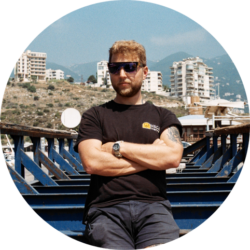
MATEUSZ POLAKOWSKI
Mateusz Polakowski is a maritime archaeologist who`s area of expertise include risk assessment to underwater cultural heritage sites within the EIA process, remote sensing data collection, archaeological diving and fieldwork coordination. He received his M.A. in Maritime Archaeology from East Carolina University (2016) and PhD from the University of Southampton (2025). In 2014-2024 he has worked as a Marine Archaeologist at the RPM Nautical Foundation and since 2020 he is a Senior Project Manager at the MSDS Marine Ltd.
Abstract “Ancient Roman Warships and how to find them: The Battle of the Egadi Islands (241 BC) – From debris to battlefield”
The Battle of the Egadi Islands Archaeological Site is the only example of an archaeologically verified ancient naval battle in the Mediterranean and one of the few examples of archaeologically contextualized naval rams. With 27 naval rams recovered from the site, this presentation will discuss the efforts to locate the battle, the insight into events of the battle gained from the archaeological evidence, and naval strategies in the mid-3rd Century BC.

JAKOB SEERUP
Dr Jakob Seerup is a historian and museum curator specialising in naval, military, and Baltic regional history. He holds a PhD in naval history and serves as curator at Bornholms Museum, where he works with collections, exhibitions, and research projects spanning from early modern coastal defence to the Cold War and contemporary security issues in the Baltic Sea.
His publications include studies on 17th–19th-century Danish naval operations, analyses of the Soviet bombardment and occupation of Bornholm in 1945–46, and recent work on local experiences of global conflict. He has also contributed to international anthologies and curated several exhibitions.
Jakob regularly lectures on Baltic security, naval culture, and the relationship between local communities and global geopolitics. He has appeared widely in Danish media, serves as adviser on maritime cultural heritage, and is committed to bridging academic research with public history.
Abstract “Bornholm as a fortified island”
Bornholm occupies a peculiar position within the Danish realm. Situated far out in the Baltic Sea, the island has always been exposed to foreign threats and entangled in the power struggles of the surrounding great powers. Yet from the seventeenth to the nineteenth century, the protection of Bornholm was to a remarkable degree left in the hands of the islanders themselves. No permanent regiment was ever stationed on Bornholm. Thus, unlike the Danish mainland, the island’s defence relied on a decentralized system of earthworks, gun batteries, and local militia.
This circumstance produced a landscape unlike any other in Denmark. Along the coastline one still encounters the remains of ramparts and batteries erected at strikingly short intervals – often no more than 300 metres apart. These sites testify not only to military engineering but also to a strong local determination to defend the island against incursions, whether Swedish, Russian, or later British. Bornholm therefore presents the densest concentration of coastal fortifications in the Danish kingdom, created not through central royal investment but through community effort and obligation.
At the same time, Bornholm was complemented by Denmark’s easternmost naval fortress, Christiansø, constructed in the late seventeenth century on two small skerries north-east of the island. Christiansø combined advanced bastioned fortifications with a permanent naval presence and played a unique role as an outpost in the Baltic Sea. Its history illustrates both the ambitions and the limitations of Danish maritime power in the region.
By juxtaposing the community-based defences of Bornholm with the royal fortress of Christiansø, this paper explores how geography, local initiative, and naval strategy interacted in shaping coastal defence. The island thus offers a microcosm of early modern coastal warfare, where fleets, fortifications, and local societies all contributed to the protection of a strategically vital yet vulnerable coastline.

IAN SPELLER
Ian Speller is Professor of Military History at Maynooth University, where he serves as Head of the Department of History and Director of the Centre for Military History and Strategic Studies. Previously, he was Lecturer and Senior Lecturer in Defence Studies at the UK Joint Services Command and Staff College at King’s College London. His research focuses on maritime strategy, naval and military history, expeditionary and amphibious warfare, post-1945 British defence policy, and contemporary Irish defence and security policy.
In addition to teaching undergraduate and postgraduate courses at Maynooth University, he delivers professional military education at the Irish Defence Forces’ Military College and oversees accredited programmes provided there by Maynooth University. He has published extensively on maritime strategy and expeditionary operations, including major monographs and edited volumes, and is editor of the open-access Journal of Military History and Defence Studies.
Abstract “Coastal defence: learning lessons from the past for a contested future”
This paper will address the idea that we can ‘learn lessons’ from the past and will examine the challenges of doing this with reference to classic works of maritime strategy, including those of Alfred Mahan and Julian Corbett. It will then address that challenge to the specific matter of coastal defence, and will explore (briefly) a number of historical examples in an attempt to identify issues of enduring relevance for current and future coastal defence operations.
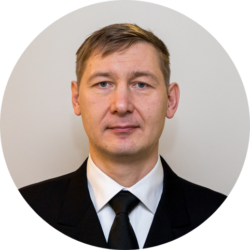
TAAVI URB
Lecturer in Maritime Operations at the Baltic Defence College.
Abstract “Interpretation of Coastal Defence within Maritime Strategic Theory”
This study examines the concept of coastal defence as a strategic phenomenon within maritime security, tracing its evolution from historical interpretations to its relevance in contemporary NATO doctrine. Coastal defence has traditionally represented a pragmatic approach for states with limited naval resources, emphasizing denial strategies over global sea control. The paper explores the ambiguity of the term across different contexts—highlighting doctrinal debates in interwar Estonia, contrasting NATO’s avoidance of the term with its focus on littoral and amphibious operations, and situating coastal defence within broader maritime strategic theories alongside seapower and commerce-raiding schools. Ultimately, coastal defence is presented as a continuum of adaptive strategies rather than a fixed doctrine, offering enduring relevance for small coastal states in an era of complex maritime threats.

PAUL RICHARD AUSTIN
Commander (US Navy, retired) Paul Austin served in the United States Navy from February 1996 until January 2018. He graduated the University of Oklahoma in 1996 (B.A., Aviation Science) as well asthe Royal Military Academy Belgium and Naval Education and Training Command at the naval station in Newport 2010 (M.A., Maritime Geo-Politics). During his extensive career, he has served as a navigator and operations officer on US warships, deputy commander of Task Force SIX FOUR and as an operations officer for Task Force SIX EIGHT. Since 2023 he is a lecturer in the Leadership Department of the Estonian Military Academy and since 2024 lecturer for the Baltic Naval Intermediate Command and Staff Course Officer at the Latvian Defence Academy.
Abstract “The Multi-Dimensional Fight: Challenges of Operating Surface Warfare Combatants in the Littoral Zone”
This work discusses the surface warfare activities and operations in coastal waters, or as it is known in United States maritime doctrine, the littoral or near-land zones. The challenges and opportunities presented to fleet commanders when operating in coastal areas are appreciably different than those presented to fleet commanders on the high seas. As Captain Hughes writes in his important work on naval tactics, the seat of purpose for naval activities is always ashore. This brings navies, whether by the ship or by the squadron or by the fleet towards objectives on land where the substantial firepower afloat can be concentrated in a combined arms manner with joint forces ashore. This proximity also includes challenges and dangers from enemy forces ashore. In response, navies are required to adapt ships, weapons, and tactics to meet the complex demands of coastal warfare. Expeditionary warfare and coastal defense both become the stage where technology, innovation, and creativity race to provide an advantage. Creativity in ship design and tactical employment are of interest as navies try to introduce the most capable vessels and most effective means of deployment.
The legacy of these intellectual developments can still be seen in the twenty-first century. Antiaccess and area denial are still just as important and the cooperation between shipborne and land based weapons platforms remains ever-deepening and increasing in complexity. Coastal warfare, specifically in the Baltic Sea, remains an ongoing challenge for naval forces and will continue to demand attention from the region’s naval thinkers in the decades to come.
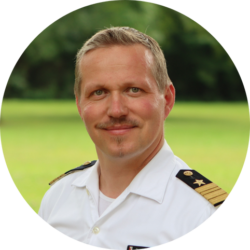
CHRISTIAN JENTZSCH
Since 2019 he is a Research Associate in the project area of operational history at the Center for Military History and Social Sciences of the German Armed Forces ( ZMSBw)Center for Military History and Social Sciences of the German Armed Forces) in Potsdam.