


13.02.-01.11.2026
Seaplane Harbour
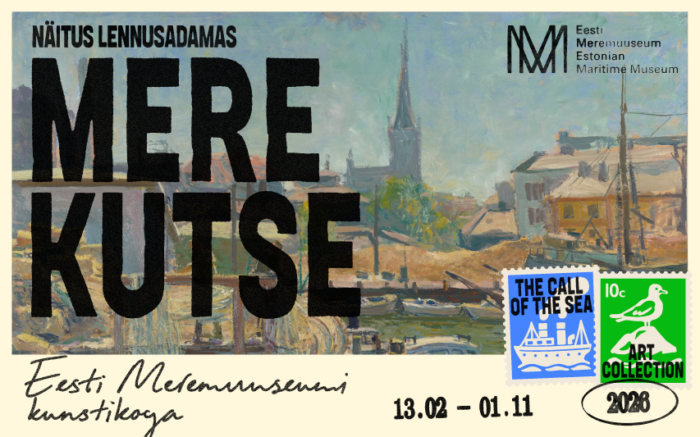
The art collection of the Estonian Maritime Museum is being presented to the public for the first time in such a comprehensive manner. The collection was established more than 90 years ago when preparations to open the museum were underway. Today, the collection, which comprises more than 900 works, stands out as one of the most distinctive in the Estonian art scene – most of the authors were not professional artists, but sailors, fishermen, captains or naval officers. In other words, the collection was shaped less by considerations of artistic quality than by the stories these images tell about the sea and maritime culture.
The emergence of marine painting as an independent genre dates back to the turn of the 15th and 16th centuries when the Age of Discovery transformed not only nautical charts but also humanity’s understanding of itself and its place in the world. Looking back at the heyday of marine painting in Western Europe, the genre has always been closely tied to national success stories, as seen in the 17th-century Netherlands or 18th-century Great Britain. The same trend can be seen in the history of art here: a real fascination with marine art arrived with the establishment of the Republic of Estonia. However, it cannot be said that the sea or ships were not painted in Estonia before that. On the contrary – they were painted and in great numbers! The creators of these paintings were not to be found in art school studios, but in fishing villages, piers and on the decks of ships.
The exhibition offers an overview of the art collection of the Estonian Maritime Museum and of several subgenres of marine art, but above all, it is a tribute to the artists who answered the call of the sea with their brushstrokes.
EXHIBITION TEAM
Curators: Kadri Asmer, Laura Jamsja
Collection manager of the Estonian Maritime Museum’s art collection: Laura Jamsja
Exhibition design: Mae Kivilo
Preparation of exhibition items: Laura Jamsja, Oksana Leontjeva, Meeli-Heli Lepna, Maria Väinsar, Eve Paavel, Ruth Ristmägi, Siiri Pajo, Konserveerimis- ja Digiteerimiskeskus Kanut, Eesti Meremuuseumi kogude osakond
Language editing and translations: Hille Saluäär, Tiina Olop, tõlkebüroo Interlex, Toimetaja tõlkebüroo, Adam Cullen
Illustrations and special graphic solutions: Mae Kivilo, Kärt Šois, Roman Matkiewicz
Author of audio stories: Kaisa Ling
Voices: Kaisa Ling, Patrick Tubin McGinley, Lembit Peterson, Juhan Soon
Production of audio: Ajar Stuudiod OÜ
Technical solutions: Helina Torv, Valter Vaht, Tõnis Veltman
Development of the digital guide: Karl Kipper
Animation, projection mapping: Lauri Laasik
Translation to sign language: Triin Jõeveer (MTÜ Viipelism), Bella Kurg
Translation to easy-to-read language: Kerttu Rakke ja Janek Muru (Vaimupuu MTÜ)
Accessibility solutions for visually impaired visitors: Katriin Reinsoo, Artur Räpp
Tactile exhibits: Reet Reidak, Eesti Rahvusraamatukogu Pimedate Raamatukogu, Ebrahim Bakhshayeshi ja Nima Sarabi (Miniature OÜ)
Exhibition construction and furniture: Andres Ojasu, Trage OÜ
Framing: ArtSmart prindistuudio, Uve Untera, Maria Väinsar
Installation of exhibits, light: Valge Kuup OÜ
Educational and public programmes: Helene Uppin, Kristel Bultot, Irma Mets
Marketing project manager: Iris Tomson
Marketing graphics: Tabasco
Communication: Laura Maide
Exhibition project manager: Kadi Karine
Special thanks to: Eesti Meremuuseumi kollektiiv, Sander Jürisson, Henri Linnaks, Veiko Mataloja (Fratelli Grupi OÜ), Alex D. Ombler, Katrina Saar, Gerda Saarinen, Katrin Savomägi, Kai Stahl, Kristiina Tiideberg, Ants Vares, SA Eesti Kunstimuuseum, Virumaa Muuseumid, SA Konserveerimis- ja Digiteerimiskeskus Kanut
Sponsor: Eesti Kultuurkapital